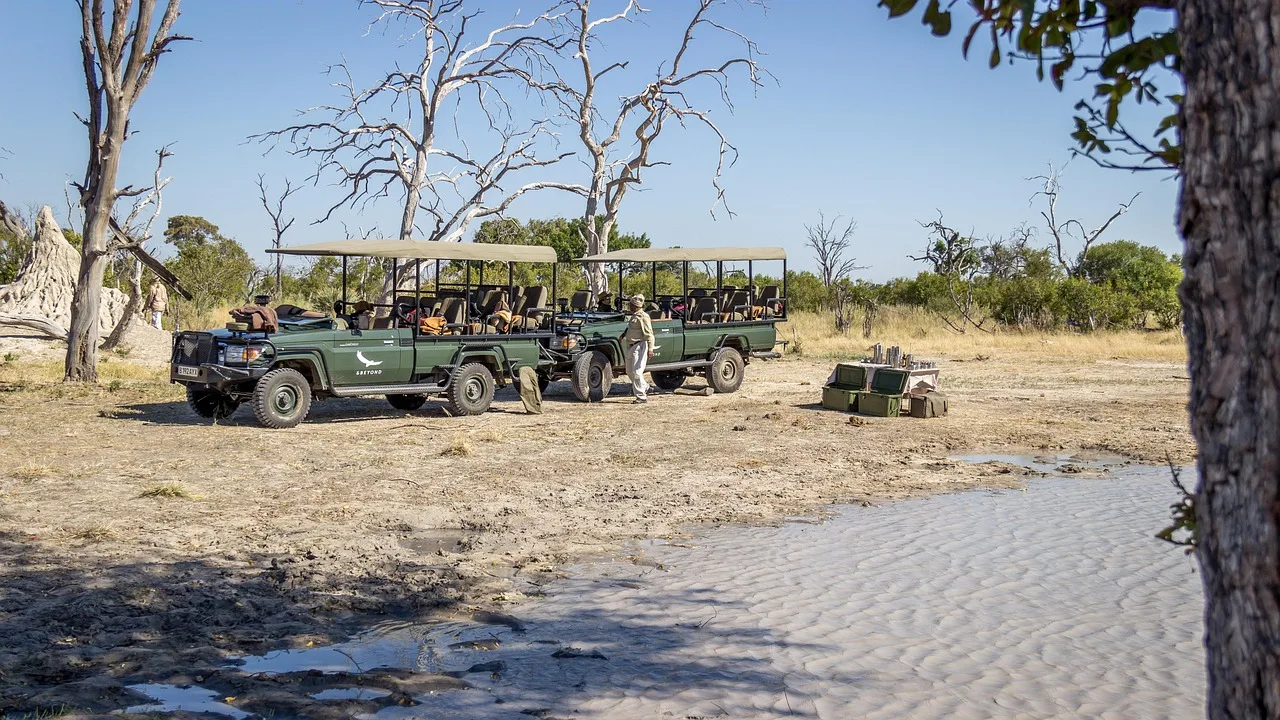
A multi-generational family safari in Kenya — grandparents, parents, and children experiencing Africa together — represents one of the most meaningful and complex travel challenges an itinerary planner can face. The needs, physical capacities, attention spans, interests, and energy levels of a four-year-old, a fourteen-year-old, a forty-five-year-old, and a seventy-five-year-old are so fundamentally different that an itinerary designed primarily for any one generation will necessarily shortchange the others. Getting it right requires thinking simultaneously about wildlife encounter quality, physical accessibility, educational engagement, safety protocols, accommodation flexibility, and the practical logistics of keeping a multi-age group comfortable, energised, and genuinely delighted across an entire week or more of travel.
This is exactly the kind of planning challenge that Nina Safaris was built for. Having designed multi-generational Kenya safaris for families ranging from three generations of four to extended family groups of sixteen, we have developed an approach to this particular brief that prioritises the shared moments of wonder that unite every age while deliberately accommodating the divergent needs that, if ignored, will fragment the experience for everyone.
Why Kenya Is One of the World's Finest Multi-Generational Safari Destinations
Not every safari destination in Africa handles the full age range of a multi-generational group with equal facility. Kenya's particular combination of geography, infrastructure, camp quality, and wildlife diversity makes it exceptionally well suited to families spanning three or four generations.
The logistical infrastructure that exists in Kenya — domestic flights connecting all major destinations, a range of accommodation from child-friendly mid-range camps to ultra-luxury lodges with private family villas, good road networks between key parks, and a concentration of the most iconic African wildlife experiences within relatively short distances of each other — means that the practical challenges of moving a diverse age group between destinations can be managed without the exhaustion that might result in, say, a remote Botswana safari or an off-grid Ethiopian highlands expedition.
Wildlife density in Kenya's major parks during the dry season is also particularly forgiving of the shorter attention spans of younger children and the need for more frequent stops and breaks that grandparents may require. In the Maasai Mara, Amboseli, and Samburu in particular, extraordinary wildlife encounters happen frequently enough that even a shorter game drive of two hours produces sightings that will be discussed for years.
Understanding What Each Generation Needs from a Safari
Young children on safari are simultaneously the most rewarding and the most logistically demanding members of any multi-generational group. Their wonder at seeing a real elephant for the first time — an animal they have only previously encountered in picture books — is genuine, unfiltered, and utterly infectious. The same emotion runs through an entire vehicle when a four-year-old whispers "it is so big" at their first elephant encounter. These moments are among the most treasured memories any family takes home from Kenya.
The practical challenges are equally real. Young children cannot sustain four-hour game drives. They require frequent bathroom stops, which require special planning in areas where leaving the vehicle is restricted. Heat and sun exposure require careful management. And the late evenings that define adult safari culture — sundowners, dinner at eight, conversation around a fire — are impossible to sustain with exhausted toddlers.
What they need from the itinerary: Shorter game drives of one to two hours maximum, accommodation with a swimming pool for afternoon energy release, child-appropriate meals available at flexible times, and at least one day activity specifically designed to engage their interest — a bush walk to look at insects and tracks, a visit to a Maasai village, or an afternoon of birdwatching with a child-sized pair of binoculars.
Kenya highlights that captivate this age group: Elephants (without exception the most impactful wildlife encounter for young children), giraffes and zebras, flamingos at Lake Nakuru, and any interaction that involves sound — the roar of lions, hippo grunts, bird calls that guides teach children to identify.
Children in the eight to twelve age range are, in many ways, the ideal safari travellers. They have the physical stamina for full game drives, the cognitive capacity to engage meaningfully with guides about animal behaviour and ecology, and the emotional receptiveness to have experiences that genuinely shape their understanding of the natural world. Many adults who work in conservation, science, or environmental advocacy trace the origin of their passion to a childhood wildlife encounter in Africa.
This age group benefits enormously from a guide who understands how to engage young people — not by dumbing down the content but by providing the kind of information that is genuinely fascinating at this developmental stage. How cheetah mothers teach their cubs to hunt. Why wildebeest cross the Mara River despite the crocodiles. How termites engineer their mounds to regulate temperature. Children who receive this level of intellectual engagement return home with a depth of knowledge and enthusiasm that enriches the experience for the entire family group.
What they need from the itinerary: A genuinely knowledgeable and engaging guide, at least one junior ranger or bush school experience if available at the camp, age-appropriate explanatory material, and the freedom to ask unlimited questions. Consider assigning children their own wildlife journal and encourage documentation of every sighting — many lodges provide these as a welcome gift.
Kenya experiences that resonate at this age: Predator behaviour (cheetah hunts, lion kills), the ecology of the Great Migration, guided bush walks with tracking and insect identification, and the conservation stories of endangered species like the northern white rhino at Ol Pejeta Conservancy.
Teenagers are the generation most often identified as "difficult" on family safari trips, and the concern is frequently unfounded when the itinerary is designed with their specific needs in mind. The key is to ensure that the safari experience does not feel like something imposed upon them but rather something they are genuinely participating in and capable of engaging with as young adults.
Teenagers respond remarkably well when given roles of genuine responsibility on safari. Asking them to manage the camera system and document the family's wildlife encounters, to track sightings in a shared family journal, or to take the lead in asking guides questions turns passive experience into active participation. Kenya's wilderness guides, who frequently combine deep ecological knowledge with stories of conservation challenges, anti-poaching operations, and community development, are some of the most compelling conversationalists that a curious teenager will ever encounter.
What they need from the itinerary: Connectivity at accommodation points for reasonable digital access in off-hours, activities that involve a degree of physical challenge (walking safaris, bush runs with guides, kayaking on Lake Baringo), opportunities for genuine conversations with Maasai or Samburu community members about their lives and culture, and permission to develop their own narrative of the experience rather than following an adult-defined one.
Kenya experiences that engage teenagers specifically: The conservation story at Ol Pejeta (the northern white rhino story is genuinely moving at any age), cultural immersion with Maasai communities on cultural safari programmes, night drives and the ecosystem of darkness, and photography as a serious pursuit rather than a family documentation exercise.
Senior travellers bring something irreplaceable to a multi-generational safari: a depth of life experience and perspective that amplifies the meaning of everything the family encounters. A grandparent who has spent a lifetime caring about the natural world and sees, for the first time, the last two northern white rhinos on earth standing in a conservancy in Kenya is experiencing something of extraordinary personal significance — and sharing that with grandchildren creates the kind of inter-generational moment that defines family history.
The practical requirements of senior travellers vary enormously. Some seventy-year-olds are fit, mobile, and adventurous; others require careful consideration of medical access, physical accessibility at accommodation, and the management of heat, altitude, and the jarring of rough tracks. The key is honest assessment of specific individual needs rather than generalised assumptions.
What they need from the itinerary: Ground-floor accommodation or properties with lifts and minimal steps, accessible bathroom facilities, medical information including the location of the nearest clinic or hospital to each night's accommodation, flexibility to opt out of physically demanding activities without disrupting the family group, and game drives that do not require climbing in and out of high vehicles — side-entry Land Cruisers with folding steps are the standard solution.
Specific planning considerations for senior travellers: Comprehensive travel insurance that includes medical evacuation coverage is non-negotiable. Nairobi Hospital and Aga Khan University Hospital in Nairobi are excellent facilities. All major park areas have emergency aircraft landing capability, and Amref Flying Doctors, the pioneer of aerial medical services in Africa, operates extensively across Kenya's national park areas. We provide detailed emergency and medical information as part of every multi-generational family safari package.
A Sample Seven-Night Multi-Generational Kenya Itinerary
Destination Recommendations for Multi-Generational Groups
🐘 Amboseli National Park — Top Recommendation
Amboseli's combination of close-up elephant encounters, iconic Kilimanjaro views, and compact park size makes it the single best park for multi-generational groups. Wildlife sightings are reliable and frequent even from camp decks, minimising pressure on family members who cannot sustain long game drives. Read our Amboseli destination guide.
🦁 Maasai Mara National Reserve — Essential
Non-negotiable for any Kenya family safari. The density of iconic wildlife, the drama of predator encounters, and the Maasai cultural component create the complete Kenya experience that defines the safari for every member of the group. Read our Maasai Mara destination guide.
🦩 Lake Nakuru — Flamingos for All Ages
The visual spectacle of a million flamingos is universally captivating. The rhino sanctuary delivers reliable close-up encounters with an endangered species that carries genuine conservation significance, and the compact park is logistically easy for mixed-age groups. Read our Lake Nakuru destination guide.
🌊 Diani Beach — The Perfect Finale
Two to three nights on the Indian Ocean coast after a bush safari is one of the most satisfying travel experiences Kenya offers. The beach provides complete physical recovery for seniors, unlimited energy release for children, and the sensory contrast of moving from the savanna to the Indian Ocean in the space of an hour by domestic flight. Our beach safari combination packages are designed for exactly this purpose.
Accommodation Selection for Multi-Generational Groups
Accommodation selection for multi-generational groups requires specific criteria beyond tier and price. These are the features to confirm before booking any property for a family spanning three or more generations:
Room Configuration and Inter-Connectivity
Multi-generational groups typically need a combination of room types: family rooms or interconnecting tents for parents with young children, standalone tents or rooms for teenagers who value independence, and ground-floor accommodation with accessible bathrooms for senior family members. Most lodges can accommodate this configuration with advance notice, but confirming room allocations at the time of booking — not on arrival — is essential.
Swimming Pool
A swimming pool is the single most important amenity for multi-generational groups with young children. The afternoon rest period — which exists at every tented camp and lodge as the midday heat requires a pause in game activities — is transformed from a potential restlessness crisis into a genuinely enjoyable family period when a swimming pool is available. Confirm pool dimensions and depth are appropriate for children before booking.
Medical Information and Emergency Protocols
Every property recommendation we make for multi-generational groups includes specific information about the nearest medical facility, the camp's first aid capabilities, and the procedure for emergency evacuation. This information is provided in our pre-departure documentation and is discussed with group leaders before arrival in Kenya. Peace of mind on these questions is the foundation of a relaxed multi-generational safari experience.
Activities That Work Across All Generations
The finest multi-generational safari itineraries identify specific shared activities that create genuine inter-generational moments rather than merely scheduling age-specific programmes in parallel. These are the Kenya activities that we have found, consistently across many years and many different family configurations, to unite rather than divide a multi-generational group:
The First Elephant Encounter
No matter how many times experienced adult travellers have seen elephants, watching a four-year-old or a seventy-year-old experience their first elephant at close range in the wild creates a shared emotional moment that defines the safari for everyone in the vehicle. Prioritise at least one game drive that focuses specifically on close elephant encounters, particularly in Amboseli where this is most reliably achievable.
Hot Air Balloon Safaris
A dawn hot air balloon flight over the Maasai Mara, followed by a champagne bush breakfast on the plains, is one of the most universally appreciated experiences in Kenya's safari portfolio. Children typically require minimum age five and a height of at least 120 centimetres; confirm specific operator requirements when booking. The shared experience of rising above the savanna at sunrise, watching the landscape unfold below and wildlife moving on the golden plains, creates one of the most powerful shared family memories available in East Africa.
Maasai Cultural Village Visits
A well-organised cultural visit to a Maasai community engages every generation simultaneously but in different ways. Young children are captivated by the singing, the jumping dances, and the goats and cattle. Teenagers engage with the reality of Maasai life as it intersects with modernity. Adults and grandparents gain insight into a culture that has coexisted with Kenya's wildlife for centuries. Ask your guide or operator to identify genuine community visits rather than purely tourist-oriented performances. Our cultural safari packages include carefully selected community engagement opportunities.
Sundowners in the Wild
The East African sundowner — vehicles stopped at a scenic viewpoint as the sun descends, drinks brought out from a cool box, the family together watching the sky turn from gold to amber to deep red over the African bush — is one of the great travel rituals of the world. It works for every age simultaneously. It requires no physical capability. It needs no explanation. It is simply beautiful, and it is the moment that most families identify, when they look back on a Kenya safari, as the one they would most want to live again.
The Multi-Generational Planning Checklist
Before Confirming Your Multi-Generational Safari Booking
Frequently Asked Questions About Multi-Generational Kenya Safaris
Plan Your Family's Kenya Safari Together
Every multi-generational family is different, and every itinerary we design reflects those differences. Share the ages, interests, and any specific requirements of your family group and we will build an itinerary that works for every generation — from the youngest to the eldest, and every fascinating age in between.
Explore Our Family Safari Packages →